
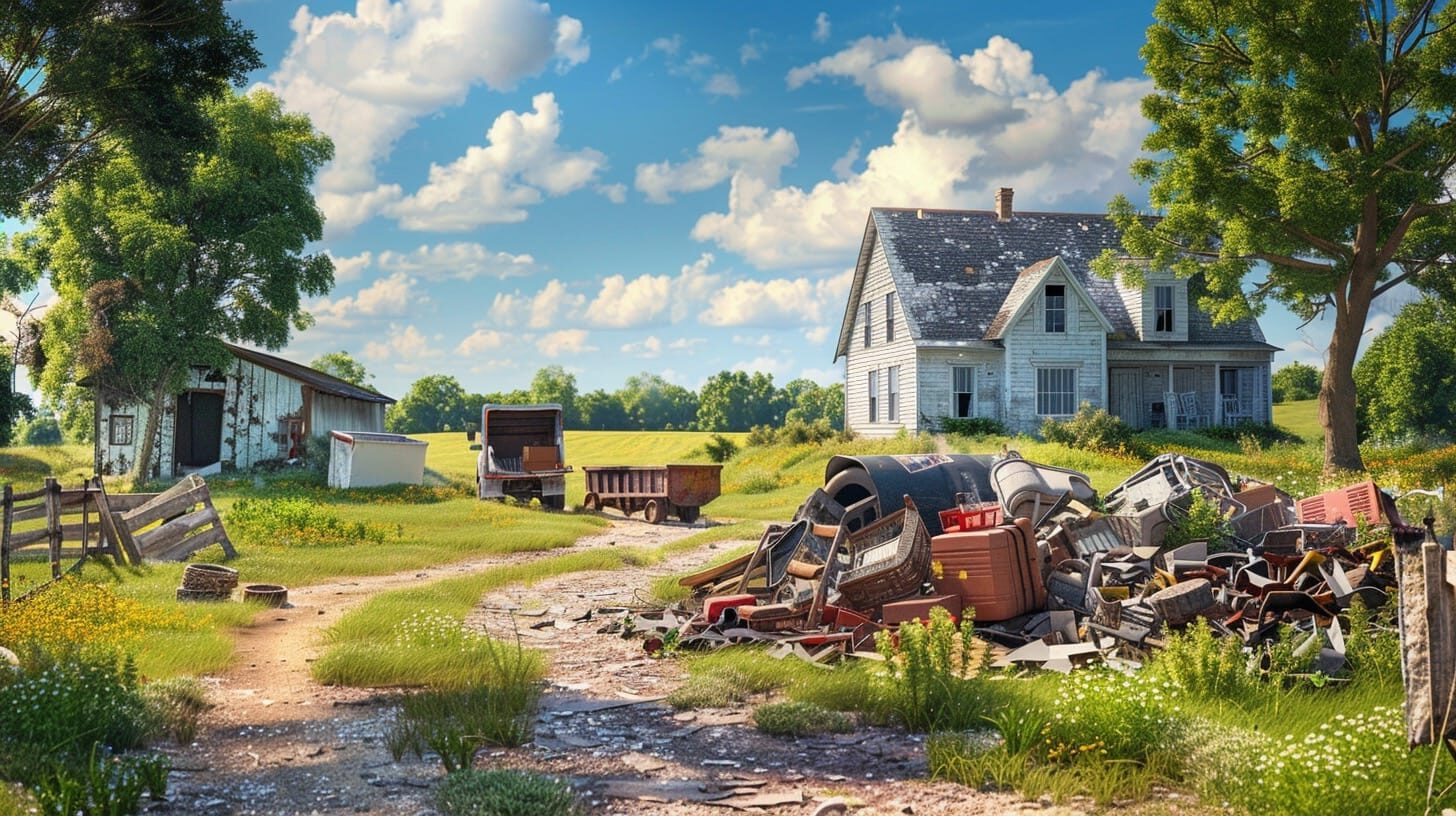
Living out in the country means space, quiet, and no neighbor close enough to complain about your compost pile. It also means no curbside pickup. If you’ve got a barn full of scrap, a dead truck in the side yard, or a garage that hasn’t seen its floor since 2019, you’re on your own to figure out where it all goes.
Here’s what actually works for rural junk removal, what it costs, and how to pick the right option for the job in front of you.
Why Rural Junk Removal Is Its Own Problem
City residents roll a bin to the curb once a week and forget about it. Out here, that’s not on the table, and a few things make rural cleanup genuinely harder:
- No municipal pickup. Most rural counties don’t run trash service. You’re driving to a transfer station or landfill yourself, or paying someone else to.
- Distance. The nearest landfill might be 40 minutes away. That’s an hour and a half round trip before you’ve even unloaded.
- Burn and dump rules. Counties regulate what you can burn or bury, and fines for violations aren’t small. Check local ordinances before you touch a match or a shovel.
- Roads that disappear. A gravel road that’s fine in July can be an axle-breaker in March. Plan hauling trips around the season, not just the calendar.
Your Five Real Options
1. Haul It Yourself
If you’ve got a truck or trailer, this is the cheapest route by far. You set the schedule, you pay dump fees and nothing else, and nobody’s waiting on you.
The tradeoff is time. Between loading, driving, waiting in line, and unloading, a single dump run can eat half a day. Call the transfer station first: hours change seasonally, and not every station takes everything (tires, paint, and electronics often need a separate drop-off). Load flat and stack tight so you’re not making three trips for one job.
2. Hire a Local Junk Removal Service
If you don’t have hauling capacity, or you’d just rather not spend your Saturday doing it, a local hauler does the loading and disposal for you.
Finding one that actually covers your address takes a little digging. Ask neighbors, check the township Facebook group, or look at the community bulletin board at the feed store. Once you’ve got a name, ask directly:
- Do you service my zip code, or is there a travel surcharge?
- Is your quote flat-rate, by volume, or by weight?
- What don’t you take?
A company like Your Junk Hero that specializes in rural service usually knows the local rules already — what the township allows, when the seasonal cleanup runs, and which back roads to avoid after a storm. That local knowledge is worth paying for.
3. Rent a Dumpster
For a barn clear-out, a renovation, or any job bigger than a truck bed can handle, a roll-off dumpster beats multiple trips to town.
Sizes typically run 10 to 40 cubic yards. Go a size up if you’re unsure. An undersized dumpster means paying for a second one, which costs more than renting bigger the first time. Your driveway needs to be flat and firm enough for a delivery truck; lay plywood down first if you’re worried about gouging gravel or asphalt.
A few things that trip people up:
- Weight limits. Concrete, shingles, and wet debris add up fast. Ask what’s included before you fill it past the line.
- Banned items. Paint, oil, batteries, and tires usually aren’t allowed in a general dumpster. Pull those out and dispose of them separately.
- Permits. Some townships require a permit for a dumpster placed anywhere near a public road, even a rural one.
- Lead time. Book early in spring and fall, when everyone else is cleaning out too.
Load heavy items first, fill gaps with smaller debris, and tarp it if it’ll sit for more than a day or two.
4. Use a Community Cleanup Day
Plenty of rural townships run an annual or seasonal bulk drop-off, often free or close to it. Check your county website, township newsletter, or local Facebook group for “bulk waste day” or “community cleanup.” These events usually accept things that are a hassle to dispose of otherwise, like appliances and electronics, and someone else handles the sorting.
Why they’re helpful:
- Typically low-cost or free.
- Convenient—they bring collection sites to you.
- Offer proper disposal for items like electronics or appliances, sometimes with minor fees.
5. Sell, Donate, or Give It Away First
Before anything goes in a truck bed or a dumpster, ask whether it’s actually junk. A lot of what piles up on rural property still has value to somebody:
- Facebook Marketplace or Craigslist for anything sellable.
- Buy Nothing or Freecycle groups for the rest.
- Feed stores and farm supply outlets, which sometimes take used tools, buckets, or fencing.
- Goodwill or a local thrift store, if there’s a rural drop-off point nearby.
Every item that leaves this way is one less thing you’re paying to haul or dump.
Junk Types That Need Special Handling
Old farm equipment and scrap metal. Don’t assume it’s worthless. Scrap dealers and junkyards often pay for tractors, implements, and metal by weight — call around before you dump it for free.
Abandoned vehicles. Many towing services will haul a dead vehicle for free if the scrap value covers their cost. Worth a call before you pay a hauler to take it.
Construction and renovation debris. Concrete and shingles are heavy enough to blow through a dumpster’s weight limit fast. For big jobs, ask about a lighter-material container or plan for more frequent hauls.
Yard waste and brush. Check local air-quality rules before burning. Most transfer stations accept yard waste separately from general trash, often at a lower rate.
Rural vs. Urban Junk Removal: Why It Costs More Out Here
Rural jobs usually cost more than the same job in town, for a few concrete reasons:
- Drive time. Haulers charge for the miles and hours it takes to reach you.
- Fewer competitors. Less competition among providers means less pressure on price.
- Permits and surcharges. Rural road placement sometimes requires permits urban jobs don’t.
- Seasonal closures. If your nearest station only runs certain months, you may end up driving farther the rest of the year.
A few ways to bring the cost down: split a dumpster rental with neighbors doing their own cleanouts, book in the off-season when haulers have more flexibility, and ask for a flat rate up front instead of a per-mile or per-ton estimate that can balloon.
Choosing the Right Option
Run through these before you commit to one method:
- How big is the job? A truck bed of junk and a barn full of junk call for completely different solutions.
- Can a vehicle reach you? Some driveways can’t handle a delivery truck, which rules out a dumpster.
- What do you already have? A trailer changes the math in favor of DIY.
- What’s your timeline? A community cleanup day only works if your junk can wait for it.
- Will you need a permit? Worth checking before a dumpster shows up.
In practice, that usually shakes out like this: a monthly trailer run for small, ongoing junk; a 20-25 yard dumpster for a full barn or property cleanout; a local hauler like Your Junk Hero when you don’t have the truck or the time to do it yourself; and a community drop-off day for the occasional appliance or electronics you don’t want sitting around until next spring.
Keeping Junk From Piling Back Up
The easiest cleanup is the one you never have to do. A few habits that actually stick:
- Do a seasonal purge instead of letting things build for years.
- Store gear you’re keeping in labeled bins so it doesn’t blur into “junk” by default.
- Set aside a donate/sell pile as you go, rather than sorting everything at once.
- If you’re mid-project for months at a time, a long-term dumpster rental can be cheaper than several short ones.
Get It Done
Rural living shouldn’t mean living with the junk pile forever. Whether that’s a trailer run to the transfer station, a dumpster parked by the barn for a week, or a call to a hauler who already knows your township’s rules, there’s a method that fits your property and your budget.
Before any of it hits a landfill, though, it’s worth a second look: can it be sold, donated, or handed off to someone who’ll actually use it?
Ready to get your property cleared out? Get a free quote from Your Junk Hero and let someone who knows rural service handle the hauling.